
The Vallejo City Directory Shelf
Vallejo has an unusually deep reported directory run. The Solano County Genealogical Society lists Vallejo city directories from 1870 through 1991, although the exact volume-by-volume gaps should be checked before citing a year. That span crosses Vallejo's industrial and naval eras, mid-century growth, and the later period when print directories became less regular. Polk titles appear in catalogs, alongside business and city-directory labels from different Vallejo years.
| Collection | Years | Where held | Access |
|---|---|---|---|
| Vallejo city directories | 1870-1991 reported span | Solano County Genealogical Society and library collection | Confirm catalog, appointment, and gaps |
| 1874 business directory | 1874 | Digitized city-directory catalogs | Online image host varies |
| Allen County digital run | 1904-1935 reported | Allen County Public Library collection | Free online where available |
| Polk and Vallejo titles | Volume-specific twentieth-century years | FamilySearch catalog and library affiliates | Catalog free; some images need sign-in |
| Times-Herald obituary listings | 1999-present reported | Genealogical Society and JFK service | Index or request route |
The Vallejo years above are collection leads, not a promise that every year is on an open shelf. A catalog record may name a volume without offering an image. Record the title, publisher, year, collection name, and access icon before building a Vallejo family timeline from a Vallejo volume.
A few dated points show how the Vallejo directory shelf fits together for a Vallejo address or family:
- 1870: the local genealogy collection reports this as the beginning of its Vallejo span.
- 1874: an identified business directory supplies an early digitized or cataloged example.
- 1904-1935: an Allen County digital run is reported for this range.
- 1953-1960: several mid-century volumes appear in the identified cataloged years.
- 1991: the reported collection span reaches this year, with individual gaps to verify.
Polk and Digitized Vallejo Directories
Identified Vallejo city directory examples include 1901-02, 1904, 1911, 1912-13, 1915, 1917, 1918, 1920, 1925-26, 1930-31, 1935, 1942, 1947, 1950, 1953-55, and 1957-60. FamilySearch catalogs “Polk's Vallejo (Solano County, California) city directory” and “Vallejo (California) city directories.” Allen County's reported digital run adds a useful online route for 1904-1935. A free FamilySearch account, affiliate library, or library subscription may still be needed to view a Vallejo image.
Digitized Vallejo access does not remove the need to inspect the volume's front matter. Publisher names, city boundaries, abbreviation keys, street sections, and owner marks can change from one year to the next. Save the exact collection title and image group. If a page is view-only, write down the volume and page reference so a Vallejo library or society researcher can reproduce the finding.
The FamilySearch Vallejo catalog is the clearest starting point for the digitized shelf.
The catalog can locate a Vallejo title even when the image access icon sends the search to an affiliate library holding a Vallejo volume for a Vallejo researcher.
How a Vallejo City Directory Entry Reads
A Vallejo directory entry is a compact record of a person in a Vallejo publication year. Start with the alphabetical name section, then read each mark in the volume's key. A typical Polk-era entry may carry a surname, given name or initials, spouse in parentheses, widow notation, occupation, business address, residence marker, street address, and a boarding or rooming mark. Some editions add an owner or renter symbol. The street or criss-cross section reverses the Vallejo search into address order.
| Name line | Surname, given name or initials, and sometimes spouse or widow notation. |
|---|---|
| Occupation | The stated role or trade, useful as a same-name clue for that year. |
| Residence | Street number and name, often preceded by a residence abbreviation. |
| Business line | Employer, firm, or business address when the volume includes it. |
| Household mark | Owner, renter, boarder, or widow symbols where that edition defines them. |
- Criss-cross directory
- The street-order half of a later volume, usually sorted by street and ascending number.
- Householder index
- A name-led list that points to the household or address entry.
- Abbreviation key
- The volume's own legend, which should be photographed or transcribed before interpretation.
- Snapshot
- A dated publication clue, not a complete list of every person at the address.
Never import a key from a different Vallejo year. A Vallejo name that disappears may have moved, died, gone unlisted, changed spelling, or been omitted by the publisher. The entry becomes stronger when a second Vallejo record supplies the reason.
Criss-Cross Vallejo by Street Number
The reverse half of a Vallejo city directory is the historical address tool. After finding a name alphabetically, switch to the Vallejo street section and look for the same number. Then read nearby numbers to see which households or businesses appeared on that block in the same year. This can separate two people with one surname and reveal that a person moved within Vallejo rather than leaving the city.
Vallejo street-order sections do not equal a modern street directory. They are limited to the publication year, may omit unlisted households, and can use a different street spelling or number convention. Retain the exact page and the source title. If an old Vallejo address does not match a current map, bridge it with APN, subdivision, cross streets, legal description, or Sanborn footprint.
JFK Library Microfilm for Vallejo
The Vallejo John F. Kennedy Library at 505 Santa Clara Street is a physical access point for Vallejo research. Solano County Library operates the second floor, while the city-owned McCune Collection occupies the first-floor building context. Public computers provide Digital Microfilm that is not remotely available. This matters when a directory entry needs a newspaper notice, sale mention, club item, or obituary that the web cannot supply.
The Vallejo library's obituary request process asks for a precise event date and searches that date through the following two weeks. The form collects requester name and email, event type and date, names, city or location, and helpful details. Search and emailed PDF are free. Mailed paper copies cost $0.20 per page, and a mail request may take three weeks. Phone, mail, and online form routes are all documented access channels.
The JFK Library access page identifies the Vallejo branch and its services.
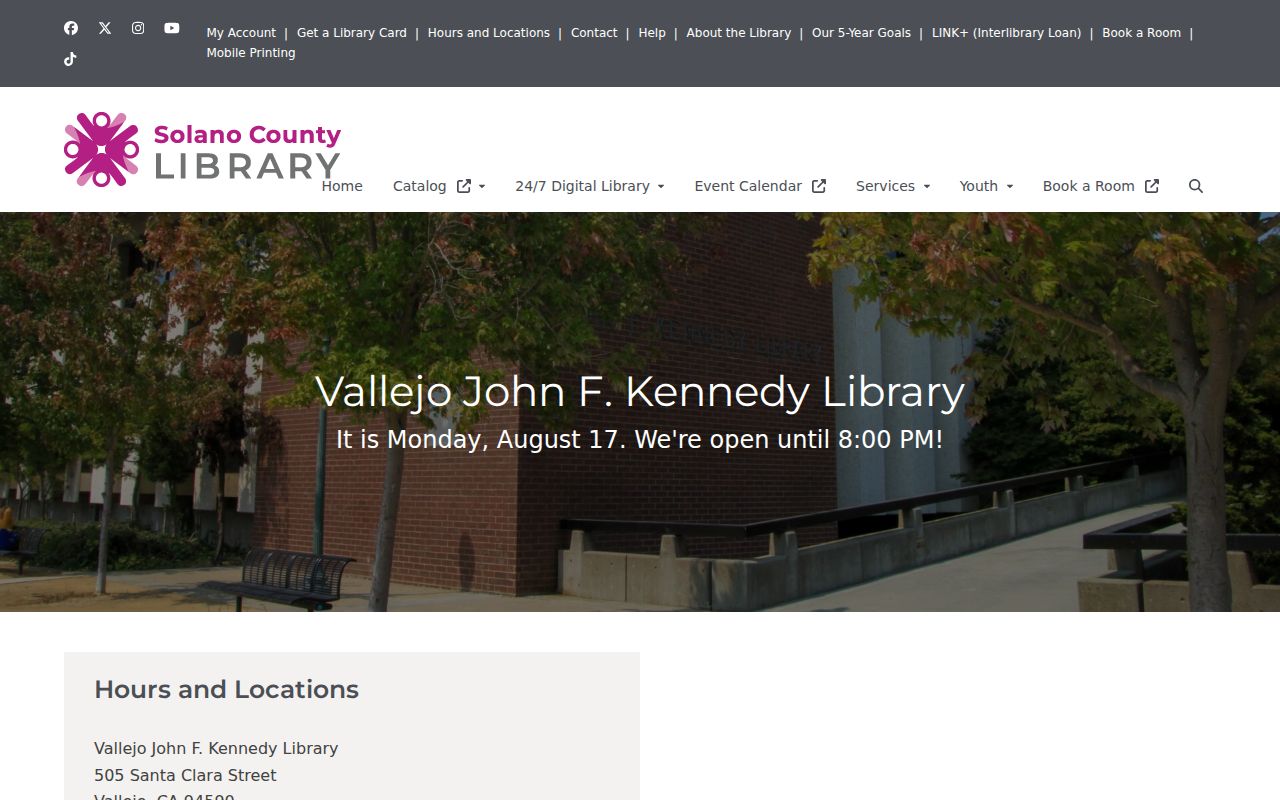
Use the library route when a directory gives a date but not the event that explains a move, death, or family connection.
Times-Herald Notices for Vallejo
Vallejo Times-Herald obituary listings are reported from 1999 to the present in the local Vallejo genealogy collection. The JFK request service can search a notice when the event date is known. An obituary may supply survivors, a cemetery, a service, a former address, or a relationship that helps distinguish two entries. It can close a Vallejo directory trail without pretending that every survivor lived at the decedent's last address.
Vallejo newspaper material is a clue, not a civil certificate. OCR errors, misspellings, allegations, and copied notices require corroboration. Compare the notice with a death record route, probate case, cemetery record, or deed. When a date is uncertain, use a narrow range and ask the library staff which title and date window they can search.
Mare Island Clues in Vallejo Directories
Vallejo's directory story overlaps Mare Island's long naval and industrial era. Occupation and organization fields can identify a shipyard or federal connection and separate same-named Vallejo residents. That clue can lead to museum newsletters, oral histories, Navy or NARA material, and photographs when the printed volume ends. It is a Vallejo research bridge, not evidence of a current home.
Mare Island also creates a Vallejo record-geography split. A 94592 address may involve city and county records, federal Navy custody, and museum collections. The Vallejo Naval and Historical Museum holds archives for civic organizations, city departments, businesses, community groups, and local families. Ask for a named collection, person, decade, and format. Confirm appointment and reproduction terms before using an archival item.
The California State Library resource page can add library databases and remote-access guidance.
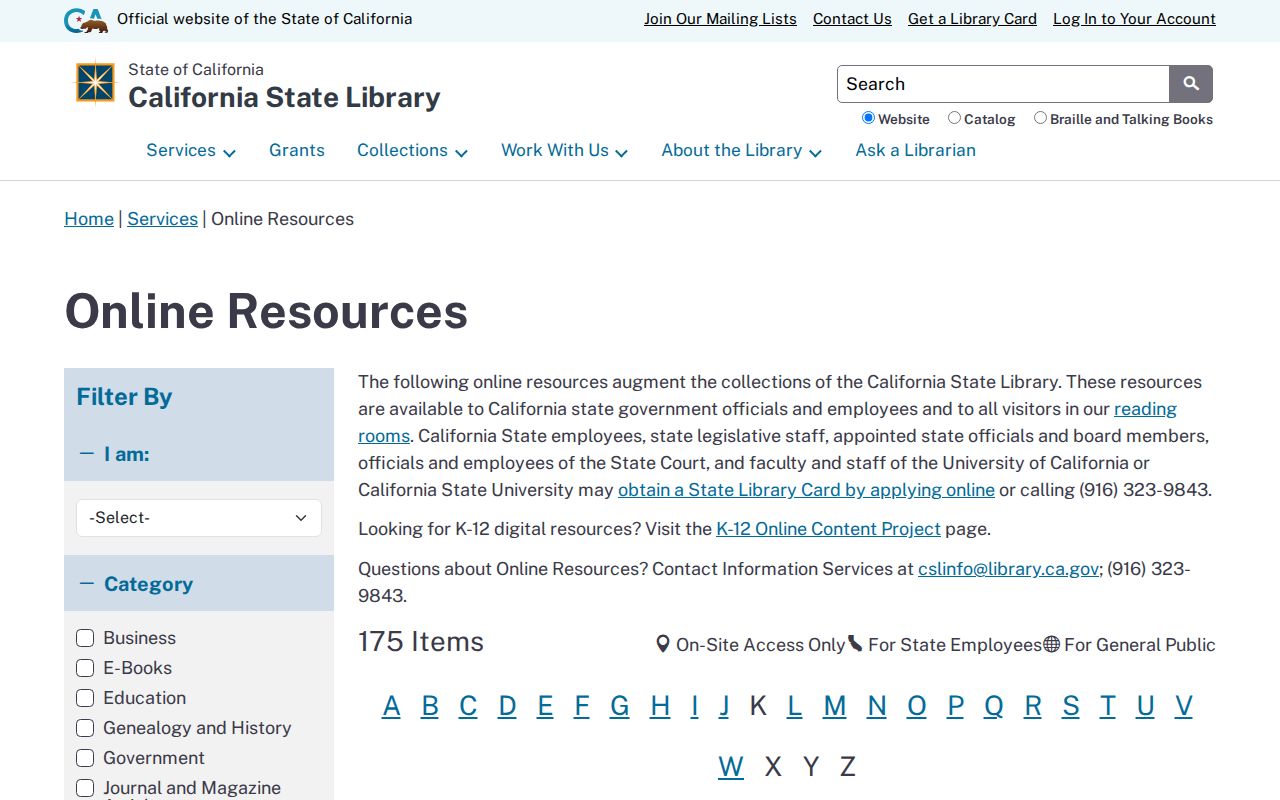
State library access can fill a Vallejo gap when a local catalog points to a licensed database rather than an open image.
Vallejo Directory Museum Fonds
The Vallejo Naval and Historical Museum's named holdings act like shadow directories. Housing Authority, Police Department, Chamber of Commerce, Greater Vallejo Recreation District, VFW, Rotary, city, business, community, and family archives can place a person in a role and year. Oral histories and photographs add context that a terse directory line cannot. The archive is not a current resident list, and membership records may be private or restricted.
California State Archives is another fallback for historical county and state series. Its catalog and reference staff can help identify naturalization, court, land, election, and institutional records, while custody may remain with Solano County. The historical county-records manual warns that indexes can be separate from the main volume or arranged within it, so an alphabetical lead may need a chronological docket or book.
These repositories are strongest when a Vallejo directory entry has already supplied a date, organization, or address clue. Ask for the smallest named collection that can answer the Vallejo question about a Vallejo person or address.
The California State Archives catalog is the source shown below.
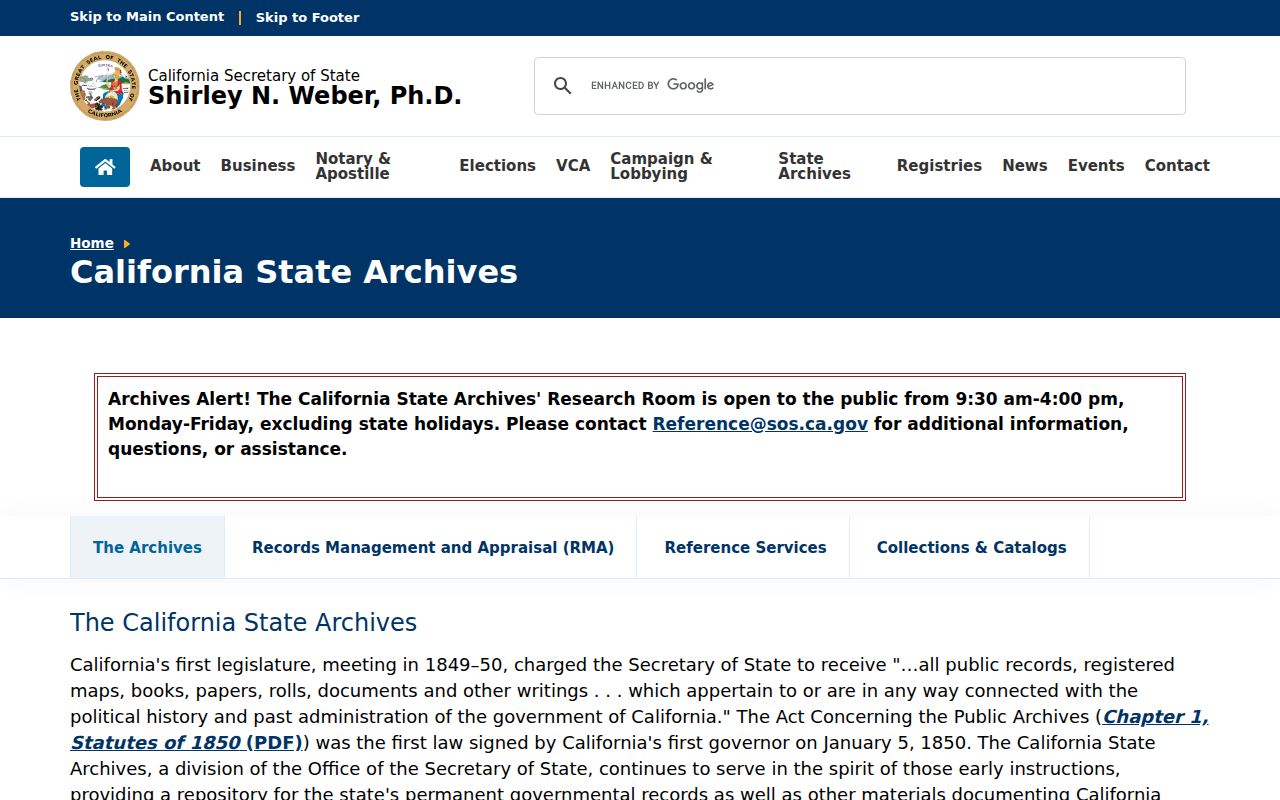
The State Archives view illustrates the catalog route for a record series that is no longer on a Vallejo library shelf.
Tracing Family Through Vallejo City Directories
A Vallejo directory year becomes useful when it is paired with the years before and after it. Start with a name and one known year. Capture the complete entry, key, page, and source. Then move through the local run, testing address, spouse, occupation, and name variants. Pair 1910, 1920, 1930, 1940, and 1950 federal schedules with the nearest Vallejo city directory year, remembering that individual census schedules become public under the 72-year rule.
- Find the first known entry and write down every field, including abbreviations and the page number.
- Search the next earlier and later volumes for the name, spouse, and street.
- Flip to the criss-cross section to test whether the address or nearby households changed.
- Pair directory snapshots with the matching federal census decade and note differences in household fields.
- Test a disappearance with an obituary, probate file, marriage record, deed, or move to another address.
A missing Vallejo entry does not by itself mean death. Wartime absences, a changed street number, a publisher gap, spelling variation, and unlisted households can all break the run. When the question becomes a current identity check, the Vallejo resident lookup page supplies the modern court, property, vital, and license distinctions.
Why a Vallejo Directory Entry Vanishes
Check the simplest explanations first: the Vallejo person moved, the publisher skipped a year, the name was indexed under a variant, the household was omitted, or the person appeared in a business rather than residence section. Vallejo's collection has a reported span, not a guarantee of continuous annual publication. A Vallejo city directory is a dated source with editorial rules, not a census.
- Compare the last known address with the next street-order section.
- Search spouse, widow, initials, business, and surname variants.
- Check the library newspaper window, probate, and cemetery clues.
- Use a deed or permit to test whether the address itself changed.
Keep the uncertainty in the Vallejo research log. A careful “not found in this volume” is more accurate than a claim that the person left Vallejo. The strongest Vallejo city directory work preserves the source, year, page, and reason for every Vallejo conclusion about a Vallejo entry.